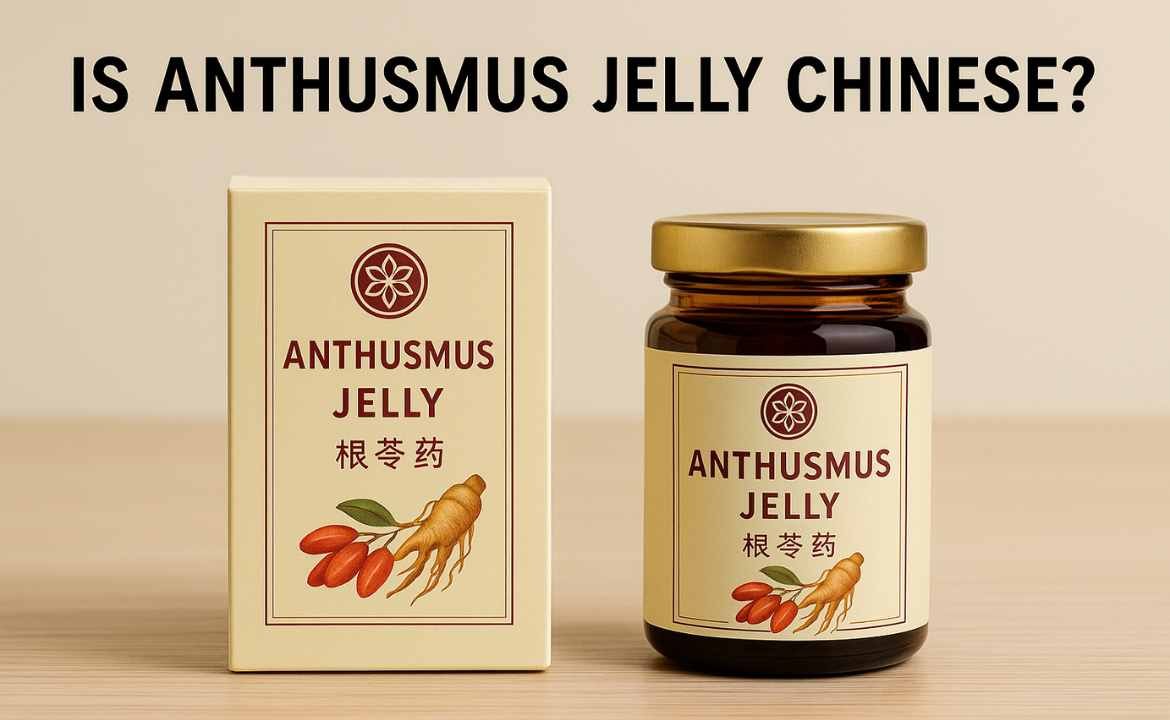
An increasing number of consumers have been asking, Is Anthusmus Jelly Chinese? This question arises due to growing interest in product origins, especially in the food and wellness industry. As people become more cautious about what they consume, understanding where a product is made and how it’s formulated becomes important. Anthusmus Jelly, often associated with herbal and traditional ingredients, has prompted curiosity regarding its manufacturing origin and cultural background.
While the jelly may feature ingredients commonly used in Chinese herbal remedies, determining whether the product is strictly “Chinese” requires deeper investigation into its ingredients, production, branding, and regional marketing practices.
Understanding the Origin of Anthusmus Jelly
To determine if Anthusmus Jelly is Chinese, we must explore both its formulation and distribution. Products labeled with herbal or botanical ingredients often have connections to traditional medicine systems. In this case, some may assume the jelly has Chinese roots due to the inclusion of ingredients like ginseng, goji berries, or other medicinal herbs often found in Traditional Chinese Medicine (TCM). This is particularly relevant when considering the increasing use of Botanical ingredients in cosmeceuticals, which frequently overlap with ingredients used in wellness jellies and supplements.
However, the presence of such components doesn’t confirm that the product is manufactured in China. Many wellness products globally incorporate similar ingredients without being Chinese. Countries like Japan, South Korea, and even Western manufacturers use these elements for their therapeutic qualities.
The packaging, labeling, and branding of Anthusmus Jelly may give clues. A product that uses Chinese characters, TCM symbolism, or references ancient Chinese practices might indicate cultural influence, but this still doesn’t confirm the manufacturing location. For a product to be considered genuinely Chinese, it must be produced or primarily developed within China.
The Role of Ingredients in Cultural Identity
The next step in answering “Is Anthusmus Jelly Chinese?” is to analyze the ingredients themselves. Typically, this jelly contains herbal extracts, plant-based gelatins, sweeteners, and nutritional supplements. If the core ingredients are sourced from Chinese farms or processed in Chinese factories, one might be able to consider the jelly as partly Chinese in nature.
However, many of these ingredients are global commodities. Ginseng, for instance, is cultivated not only in China but also in Korea and the United States. Likewise, plant-based gelatin can be sourced from various parts of the world.
It’s important to remember that cultural influence and manufacturing origin are separate. A product can be inspired by Chinese wellness philosophy without being made in China. This distinction is essential when trying to understand the background of wellness products like Anthusmus Jelly.
Global Manufacturing and Branding Trends
Modern brands often outsource production across several countries. For example, a brand may develop its formulation in one region, produce the product in another, and package it elsewhere entirely. If Anthusmus Jelly follows such a model, it would be difficult to strictly categorize it as a Chinese product.
This is especially true in the supplement and jelly industry, where multinational cooperation is common. If the jelly is branded and sold by a company located outside China, even if inspired by Chinese herbs, it may not qualify as a Chinese product.
Additionally, branding plays a key role. Some companies use Chinese aesthetic appeal to market their product more effectively. This might include Mandarin fonts, red-gold color schemes, and references to traditional wellness. However, branding for appeal does not necessarily reflect the true origin of the product.
Is Anthusmus Jelly Safe Regardless of Its Origin?
Regardless of whether Anthusmus Jelly is Chinese, the more pressing question for consumers is: Is it safe and effective? Consumers should always focus on certifications, manufacturing standards, and product transparency. Reputable manufacturers follow international food safety regulations and disclose key details such as ingredient sourcing and production locations.
Before consuming any herbal supplement or jelly, it’s wise to look for product labels that include:
- GMP (Good Manufacturing Practice) certifications
- FDA registration (if sold in the U.S.)
- Batch numbers and expiry dates
- Contact information of the manufacturer
If such information is missing, the product may not meet international standards, regardless of its country of origin.
Key Takeaways
- The question “Is Anthusmus Jelly Chinese?” is more complex than it seems.
- Ingredient heritage may be Chinese, but actual production could be global.
- Cultural inspiration doesn’t confirm geographic origin.
- Focus on safety, labeling, and certifications is more important than the country of manufacture.
- Consumers are encouraged to do background checks before purchase.
Final Thoughts
In today’s interconnected world, products often blend global ingredients, manufacturing, and branding. Anthusmus Jelly might be inspired by Chinese herbal knowledge, but unless explicitly stated and verified, one cannot conclusively label it as Chinese. A responsible consumer must always go beyond packaging and conduct due diligence on the brand behind the product.
